Procurement notes
Why I Don't Order 'Green Laser Safety Glasses' by Color Anymore
The Shipment That Didn't Look Wrong
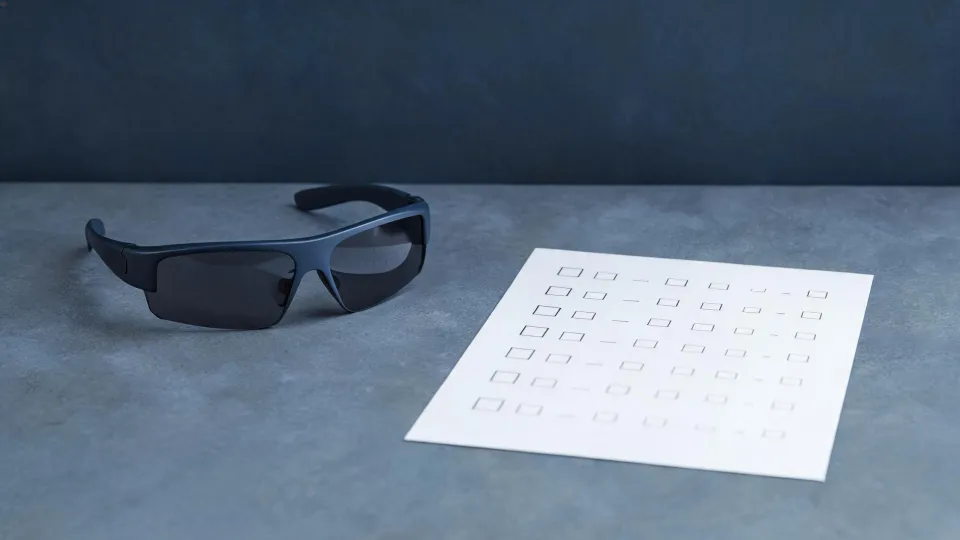
The pallet arrived on a Tuesday in March 2024. Four hundred pairs of laser safety eyewear, ordered by one of our lab clients for a new 532nm green laser setup. The supplier had labeled the boxes green laser safety glasses, and the lenses were, unmistakably, green.
Everything looked right. It wasn't.
I review every shipment of laser safety eyewear before it leaves our warehouse—roughly 400 units a month across UV, red, green, blue and prescription orders. Over the past four years I've logged rejection reasons for every first delivery. In 2023 I rejected 19% of first shipments. In 2024 it climbed to 22%, mostly due to wavelength documentation mismatches.
The green batch was almost one of them.
What a Green Lens Actually Does
Here's the thing people outside the industry don't know: a green lens transmits green light. It's the color you see coming through, which means it is not the color blocking it. So a pair of literal green-tinted glasses is one of the worst things you can put in front of a 532nm green laser. The beam passes straight through.
Our client had a 532nm setup. The lens color we actually needed was amber or orange — the kind that absorbs green and lets the eye see safely.
I caught it because I checked the wavelength spec sheet against the box label before opening the pallet (note to self: this only works because we ask for wavelength sheets now — five years ago we didn't). The supplier had written 532nm on the invoice. But the lens itself was 450–532nm transmitting, not blocking. Two completely different things. One protects a lab tech. The other is a $14,000 mistake waiting to happen.
The Phone Call
I called the supplier the same afternoon. They were, honestly, professional about it. What came out of the conversation explained a lot.
In their catalog, "green laser safety glasses" meant glasses that look green. In our sourcing request, "green laser safety glasses" meant glasses for green lasers. Both phrases are in circulation. Both are in real product listings. Neither one is standardised.
That's a legacy problem. It was somewhat true 10–15 years ago that lens color mostly tracked the laser class a shop dealt with, because the coating tech was narrower and buyers used shorthand. Today, multi-wavelength coatings and diode-pumped systems have broken that shorthand. A green-looking lens might protect against 405nm, or 650nm, or nothing you care about. The color tells you what gets through, not what stops.
The Rabbit Hole
After that call I pulled six months of orders and started checking them line by line. It took the better part of a week (I really should have built a dashboard for this by then).
Three categories turned up problems.
- Red laser safety glasses ordered for 650nm lab benches: two suppliers had shipped blue-green lenses because the buyer asked for "red laser glasses" and the supplier read it as red-tinted. Cyan lenses block 650nm best. The order was almost a full reject.
- Blue laser safety glasses for 445nm cutting/engraving hobby setups: an order arrived with amber lenses correctly specified, but no OD rating on the documentation. ANSI Z136.1 requires that the optical density at the operating wavelength be verifiable. We held the batch until the manufacturer reissued paperwork.
- UV laser safety glasses ordered for 355nm work: the lenses were clear, which is correct for UV blocking, but two of the frames were spec'd for a 52mm eye size while the client needed 56mm to fit over their prescription eyewear. Nobody noticed until fitting.
Prescription orders were the worst. Custom prescription lens coatings take 3–4 weeks. If the coating goes on the wrong substrate, you don't find out until the client opens the box — by then you've eaten the lead time and the cost. That happened to us once in 2022 on an $18,000 order; we redid 80% of it at our cost.
What We Changed
The root cause wasn't the suppliers. It was us. We'd been ordering by the color name in the catalog because it was faster, and because the industry has no enforced vocabulary for it. Customers ask for "green laser safety glasses," suppliers list "green laser safety glasses," and the two sides are talking about different physical objects.
People think expensive suppliers automatically deliver better quality. The causation runs the other way: suppliers who deliver verifiable specifications can charge more, because the documentation itself is part of the product. To be fair, that's a somewhat uncomfortable conclusion for anyone with a budget to protect. But it holds up.
Here's the protocol we now require on every single purchase order, no exceptions:
- Operating wavelength in nanometers (single value, not a range, unless a tunable system is explicitly stated).
- Required optical density at that wavelength.
- Lens transmission curve attached to the shipment (or the batch doesn't leave the factory).
- Frame fit measured against the client's existing eyewear if prescription is involved.
- Manufacturer's declaration against ANSI Z136.1 and, where the client is EU-based, EN 207.
Sourcing by wavelength, OD and physical fit. Not by color. Not by product name. Not by the word "green."
One more piece: we started asking suppliers whether their marketing claims were substantiable under FTC advertising guidance. Per FTC business guidance (ftc.gov), claims about what a product does must be truthful and substantiated with evidence. Safety claims are advertising claims. If a supplier can't back up "blocks 532nm at OD 5+" with a test report, that language doesn't go in our catalog.
The Result, Eight Months Later
By November 2024, our first-delivery rejection rate had dropped from 22% to just under 6%. Most of what's left is frame fit and shipping damage, not wavelength mismatches. Prescription redo costs for the year landed around $3,400, down from $11,000 the year before.
And the client with the green laser setup? We caught the error before the pallet shipped. They didn't know it had almost happened until I told them months later. They've since sent us two more lab facilities as referrals. I'm not going to claim that's purely about the lens catch — that's not how referrals work. But it didn't hurt.
What I'd Tell Anyone Sourcing Laser Eyewear
Three things. Wavelength. Optical density. Documentation. In that order.
The color of the lens is a consequence of the physics, not a description of the protection. Green lenses, red lenses, blue lenses — they all describe what light escapes. If your purchase order says "green laser safety glasses" and nothing else, you're trusting whoever reads it to make the same assumption you did. Sometimes they do. Sometimes they don't.
That's a risk I'm no longer willing to carry. Not because it's expensive when it fails (though it is). Because the failure mode is a lab technician's eyesight, and that is not a thing any of us gets to be wrong about twice.

I’m Jane Smith, a senior content writer with over 15 years of experience in the packaging and printing industry. I specialize in writing about the latest trends, technologies, and best practices in packaging design, sustainability, and printing techniques. My goal is to help businesses understand complex printing processes and design solutions that enhance both product packaging and brand visibility.