Procurement notes
Laser Safety Glasses Sourcing: The Spec Sheet Lied, and I Approved the Order
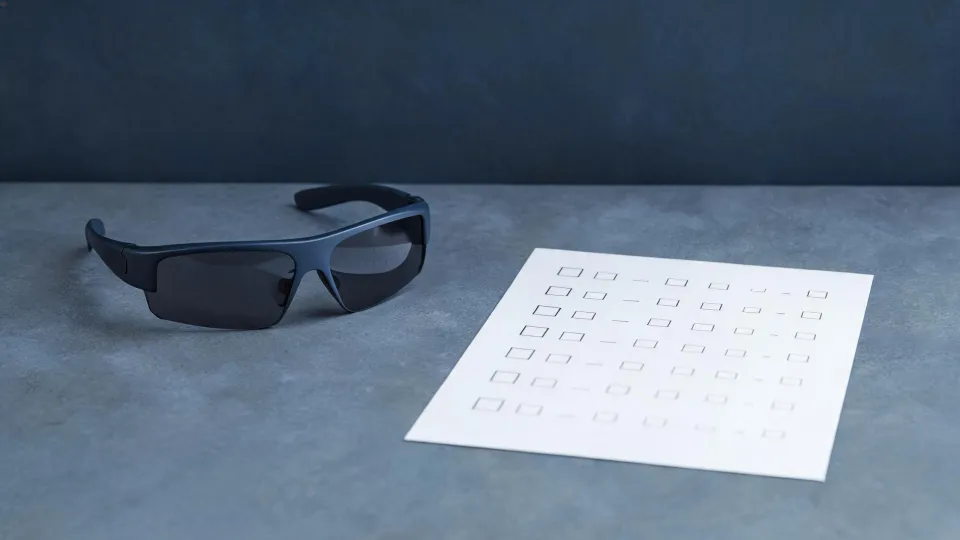
I still keep the spec sheet in a folder I labeled lessons. One page, printed for a 532nm green laser protection order. Every box checked, every number looked fine. We placed the order for 40 pairs, and six weeks later two of our alignment techs refused to wear them during a 5W DPSS build. The lenses were labeled "532nm green laser safety glasses." Technically true. Practically useless.
I'm the sourcing lead handling laser safety eyewear orders for 7 years. I've personally made (and documented) 8 significant mistakes, totaling roughly $23,000 in wasted budget—plus one near-miss on a 10.6µm CO2 line that I still think about. This is what I wish someone had walked me through in my first year, before I trusted the label on the spec sheet.
The problem you think you have
Most B2B buyers I train start with the same mental model: laser safety glasses sourcing is a matching exercise. Find the wavelength, pick the lens color, compare the price per pair. If you're sourcing red laser safety glasses, ask for red lenses. Green for green. Blue for blue. The end.
That model is wrong, and the failure mode is quiet. The glasses arrive, they look right, security inspection passes the box, and then the actual protection is either overbuilt (you paid 3x for OD you didn't need) or underbuilt (you're standing behind a 5W laser with a lens rated for 500mW).
The question everyone asks their supplier is: "Do you have 532nm green laser safety glasses?" The question they should ask is: "What is the optical density at 532nm, what's the wavelength range it actually covers, and can you send the test report from a recognized lab?" Those are different questions. Only one of them tells you whether the lens will stop the beam.
What's actually going wrong
Here's the deeper problem. "532nm green laser safety glasses" is a marketing phrase, not a technical specification. Under EN 207 (the European standard for laser protection eyewear) and ANSI Z136.1 (the US framework for selecting laser eyewear based on Maximum Permissible Exposure), the relevant facts are:
- Optical Density (OD) at each specific wavelength. OD 4 at 532nm blocks 10,000x the incident power. OD 7 blocks 10,000,000x. Those aren't the same pair of glasses, even if the lens looks identically green.
- Wavelength range, not wavelength. A lens that covers 520–540nm behaves very differently from one that covers 400–700nm broadband. The single-wavelength label hides this.
- Damage threshold. Some lenses degrade under continuous high-power exposure. The OD rating on day one is not the OD on day 400.
- Scale number (for EN 207) tied to the laser class and power the eyewear is rated against. This is what the compliance auditor actually checks.
I learned this the expensive way. In 2021 I approved a 60-pair order of "green laser safety glasses" that turned out to be OD 3 at 532nm with a 40mW damage threshold. Our alignment station ran a 5W DPSS laser. Every single pair in that order was wrong for our application. The supplier wasn't lying—the label was accurate. I just didn't know what I was reading. $4,100 in redo, a two-week production delay, and a very uncomfortable meeting with our EHS manager.
There's a second layer that prescription laser safety glasses expose. If your operators wear corrective lenses, the prescription insert sits behind the protective filter, and the combined stack introduces optical distortion, changes the effective OD (rarely, but it happens with vignetting at the edge), and—this one caught me—can shift the impact-resistance rating if the insert isn't tested with the frame. EN 166 covers the mechanical frame requirements; EN 207 covers the filter; the combination needs to be verified as a system, not as two independent parts. I once ordered prescription laser safety glasses assuming the insert was certified, and only found out at audit time that the insert manufacturer and the frame manufacturer had never tested them together. The frames passed. The inserts passed. The assembly had no paperwork.
The third layer is the one I think most B2B buyers miss entirely: the vendor who says yes to everything is usually hiding something. The sourcing agent who told me "we cover every wavelength from 180nm to 10,600nm, all OD levels, prescription, all laser classes, no problem" turned out to be a reseller with three factory partners and a marketing website. When I pushed for the test report on the 10.6µm pairs, the report came back from a lab that hadn't tested that specific filter batch. The vendor who told me, in 2022, "CO2 and far-IR are not our strength—we're a 400–1100nm specialist, here's who I'd call for 10.6µm instead," earned my business for every visible-wavelength order for the next three years. That's the expertise boundary I now actively look for. A specialist who names their limit is worth more than a generalist who doesn't know they have one.
And then there's plain communication failure. I once wrote on a PO: "532nm green laser safety glasses, prescription, OD 5+." The factory read: "green glasses, prescription, good." They shipped OD 3. Everything I said was in the document. Everything they did was plausible. We were using the same words and meaning different things, and I only discovered it when the lab scanned the lens with a spectrophotometer and the number on the readout didn't match the number on the invoice. That's a $1,900 order and a 12-day delay right there.
What it costs when the label lies
I want to be careful here, because the cost of bad laser safety glasses sourcing isn't mostly financial. The financial part is real: my last four years of documented mistakes run roughly $23,000 in wasted orders, redos, expedited replacement shipping, and audit-prep labor. That's the number I can defend in a budget review.
The number I can't defend is the near-miss. In Q3 2023, a tech was aligning a 5W DPSS 532nm system wearing a pair of our older stock—glasses we'd believed were OD 5 because the original PO said so. The actual measured OD was 4. At alignment power, a reflected beam entered from an angle the glasses weren't designed for, and the OD at that entrance angle dropped below 3. He walked away with no injury. The spectro readout afterwards is what made me rewrite our whole PO template. If that had been a 10W system, or one class higher, or one second slower to look away, we'd be having a different conversation.
Add to that the compliance-audit cost. Our EHS manager now requires, for every laser safety glasses order, a test report that ties the actual delivered filter batch to a recognized lab measurement of OD at each operating wavelength, plus a compliance statement against EN 207 or ANSI Z136.1 as applicable to our region. Without those, the glasses don't go on the floor. That requirement exists because I created the incident that made it necessary.
The pre-check list I actually use now
The fix is shorter than the problem, which is the point. For every laser safety glasses sourcing order—red, green, blue, prescription, or custom wavelength—I now require five things before I sign the PO:
- OD at each operating wavelength, in writing, with the beam power and laser class stated on the same line. "OD 5+ at 532nm, up to 5W CW" is a spec. "Green glasses, OD high" is a wish.
- The tested wavelength range and the entrance-angle assumption used in that test. Some filters lose OD past 15° off-normal—relevant for anyone doing alignment work at oblique angles.
- A batch-specific test report from a recognized lab, tied to the serials or lot numbers on the shipment—not a generic "our glasses meet EN 207" PDF.
- For prescription laser safety glasses, confirmation that the insert and the frame were tested together as an assembly, with the impact rating and the OD measured on the combined stack.
- A named limitation. If the supplier can't tell me which wavelengths, powers, or laser classes they don't cover well, I now assume they don't know. A vendor who says "this isn't our strength" is doing me a favor.
The last item took me the longest to internalize. The conventional wisdom in B2B sourcing is that a vendor who says no is a vendor who's about to lose your business. My experience with 200+ laser eyewear orders suggests the opposite: the vendor who volunteers a limit is the one whose yes means something. The one who says yes to everything has told you nothing.
I still have the folder labeled lessons. Every so often I open it, read the 532nm spec sheet, and remind myself that the label was accurate. The problem was never that the supplier lied to me. It was that I didn't know what I was asking for. The checklist doesn't make me an expert in photonics. It makes me a buyer who knows exactly where my expertise ends and the actual optical engineering begins.

I’m Jane Smith, a senior content writer with over 15 years of experience in the packaging and printing industry. I specialize in writing about the latest trends, technologies, and best practices in packaging design, sustainability, and printing techniques. My goal is to help businesses understand complex printing processes and design solutions that enhance both product packaging and brand visibility.