Procurement notes
Laser Safety Glasses Sourcing: Buy for Wavelength, Not Price
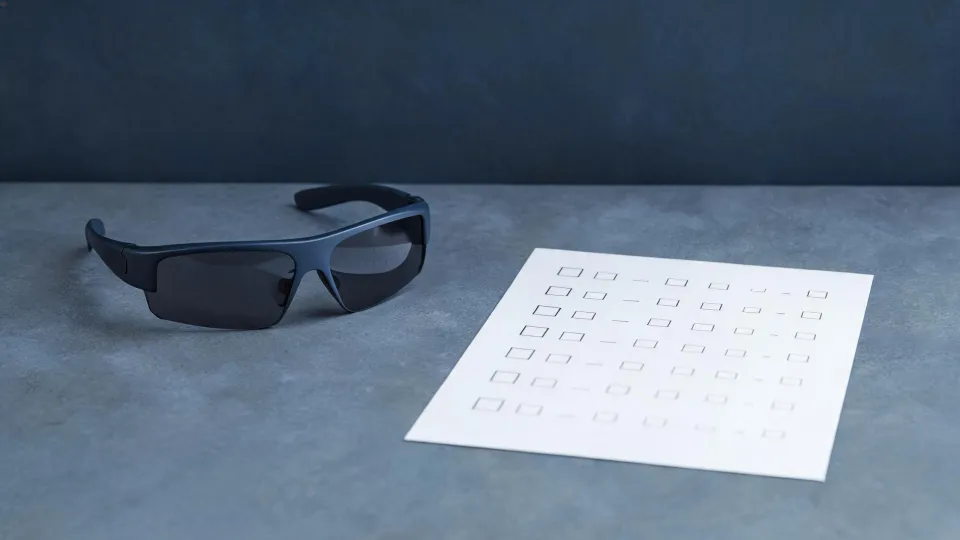
Start with the laser wavelength and required optical density, not the lens color or the cheapest quote. That is the core of Laser Safety Glasses Sourcing for B2B buyers. If you need the short version: buy laser safety glasses by wavelength and OD, verify the standard, ask about prescription laser safety glasses before assuming over-glasses will work, and treat red laser safety glasses, uv laser safety glasses, and green laser safety glasses as different products—not color options.
I’m the office administrator for a 180-person company. I manage safety supplies and lab consumables—roughly $220,000 annually across 12 vendors. I report to operations and finance. In 2024, I ran a sourcing project for 40 pairs of laser safety glasses across three labs. We collected quotes from three suppliers and saw a 2.5x price spread for what looked like the same thing. The cheapest quote failed our EHS review because it said 'green laser safety glasses' without a wavelength-specific OD curve. That’s the moment I stopped treating this as a color-matching exercise.
Why wavelength-first sourcing is the only sane starting point
I’m not a laser safety officer. I’m the person who has to turn an EHS request into a purchase order, get it through finance, and make sure the people in the lab actually wear what arrives. When I took over purchasing in 2021, I thought laser safety glasses were one category. They aren’t. The specs that matter are wavelength in nanometers, optical density (OD), visible light transmission (VLT), and the standard the eyewear is tested against.
According to OSHA’s laser hazard guidance, control measures must match the laser class and wavelength. In the U.S., ANSI Z136.1 is the foundational laser safety standard. In Europe, EN 207 and EN 208 cover laser eye protection and alignment eyewear. FDA 21 CFR 1040.10 and 1040.11 set performance requirements for laser products. I don’t memorize all of that. I ask vendors to send test data that matches the EHS spec—wavelength by wavelength.
What most people don’t realize is that lens color is not a certification. A green lens can be for a green laser, or it can be a tint for something else. The paperwork is what tells you.
Here’s something vendors won’t tell you: many listings online use the laser color as the product name because it’s easy to search. But a 532 nm green laser and a 650 nm red laser need different filters. A green laser safety glasses listing might be fine for one diode in your lab and useless for the next. That’s not a reason to avoid all online suppliers. It’s a reason to ask for the OD curve before you buy.
The value-over-price math I use now
Look, I’m not saying budget options are always bad. I’m saying they’re riskier. The lowest unit price is rarely the lowest total cost. In our 2024 project, one quote came in at $28 per pair, another at $46, and a third at $71. The $28 quote had a generic 'OD 5+' claim and no nm range. The $46 quote had actual OD curves for 532 nm and 650 nm. The $71 quote included Rx inserts and side shields.
The upside of the $28 pair was saving about $600 on 40 pairs. The risk was failing an internal audit finding and a rush reorder. I kept asking myself: is $600 worth potentially losing the EHS manager’s trust and explaining to my VP why the lab was out of compliance? The expected value said maybe. The downside felt stupid. We went with the $46 supplier for plano pairs and the $71 supplier for the two Rx wearers.
That $600 savings would have turned into a $3,000 problem pretty fast: a failed audit finding, expedited shipping on replacement pairs, and three lab techs pulled off a project while we sorted out paperwork. Is that worst-case? Yes. But I’ve seen enough 'temporary' workarounds to know they have a way of becoming permanent.
Red, UV, and green glasses are not interchangeable
People think expensive vendors deliver better quality. Actually, vendors who can document wavelength and OD data can charge more because the documentation costs them something. The causation runs the other way. So when I compare quotes, I don’t start with price. I start with what the vendor can prove.
Red laser safety glasses
Red laser safety glasses are usually selected for red and near-infrared lasers, but don’t assume the lens will be red. The filter color depends on the wavelength being blocked. A pair that works for 633 nm may not be rated for 650 nm or 780 nm. Ask for OD at the exact wavelength on your laser. If the vendor says 'red is red,' that’s not a spec. That’s a guess.
UV laser safety glasses
UV laser safety glasses cover a range of wavelengths—193 nm excimer, 248 nm, 355 nm, and others. UV protection is not one blanket rating. Some UV eyewear is clear because the filter targets invisible wavelengths; some has visible tint. The key is the OD at your wavelength and whether the frame provides enough side protection. I’ve seen quotes that list 'UV' with no nm range. I don’t forward those to EHS anymore.
Green laser safety glasses
Green laser safety glasses are common in labs using 532 nm lasers. But 532 nm is often a doubled Nd:YAG or similar, and there can be residual 1064 nm infrared in the beam path. If the eyewear is only rated for 532 nm, it may not cover the IR component. That’s a detail I didn’t know in 2021. Now I ask the LSO to confirm both the visible and IR wavelengths before I source.
Prescription laser safety glasses
Prescription laser safety glasses are not just a comfort upgrade. If your lab has Rx wearers, over-glasses can work, but they fog, reduce peripheral vision, and get left on the bench. In 2024, we ordered custom Rx pairs for two techs. The quote was roughly 35–45% higher than plano, and lead time was about four weeks. I’m not 100% sure that premium holds for every Rx power, but it hurt less than the EHS manager chasing people to wear over-glasses every week.
One caveat: prescription eyewear still needs the same OD and wavelength documentation as plano eyewear. The prescription is separate from the laser protection. Don’t let a vendor blur those two things.
How I source laser safety glasses now
My process is boring, and that’s the point.
- Get the LSO or EHS manager to write the spec: wavelength(s), OD required, VLT requirement, standard, frame style, and side shield needs.
- Ask every vendor for test reports or OD curves—not a generic certificate. If they can’t provide wavelength-specific data, they’re out.
- Compare total cost: Rx inserts, replacement lenses, side shields, shipping, lead time, and minimum order quantity. The sticker price is only one line.
- Order one sample pair for fit testing. Do not test eye protection by looking into a laser. Ever. Fit test with the wearer, then verify the documentation.
- Lock the reorder SKU. In B2B Laser Safety Glasses Sourcing, consistency matters more than a one-time deal. You don’t want a new model every quarter because someone found a cheaper listing.
Simple. Not easy, but simple.
Where this approach breaks down
This worked for us, but we’re a mid-size company with predictable ordering and one EHS manager who signs off on specs. Your mileage may vary if you’re a multi-site operation with different lasers, or a university lab where every grant buys its own eyewear. I can only speak to domestic U.S. sourcing. If you’re dealing with EN 207 in Europe or importing from overseas, the documentation requirements might be different.
Also, if you’re only buying visitors’ eyewear for a low-power enclosed system, a simpler spec may be fine. If you’re aligning a Class 3B or Class 4 laser, do not shortcut. That’s not a purchasing decision. That’s a safety decision.
And one last thing: I’m an admin buyer, not a laser safety officer. If there’s a conflict between my purchase order and your LSO’s spec, the LSO wins. Every time.

I’m Jane Smith, a senior content writer with over 15 years of experience in the packaging and printing industry. I specialize in writing about the latest trends, technologies, and best practices in packaging design, sustainability, and printing techniques. My goal is to help businesses understand complex printing processes and design solutions that enhance both product packaging and brand visibility.